
From Insight to Action: Understanding Life in Kikambala Before the Journey Begins
Real, lasting change starts with listening.
Before breaking ground on the Kikambala Resilience Initiative, Haller Foundation spent time walking the community, speaking with families, meeting local leaders and gathering evidence to understand the realities of everyday life. Over five field visits, our team surveyed 60 households across six communities, representing around 350–400 people, to establish a baseline that will guide the project and allow us to measure its long-term impact.
What we found paints a picture of a community facing significant challenges—but also one full of resilience, determination and opportunity.
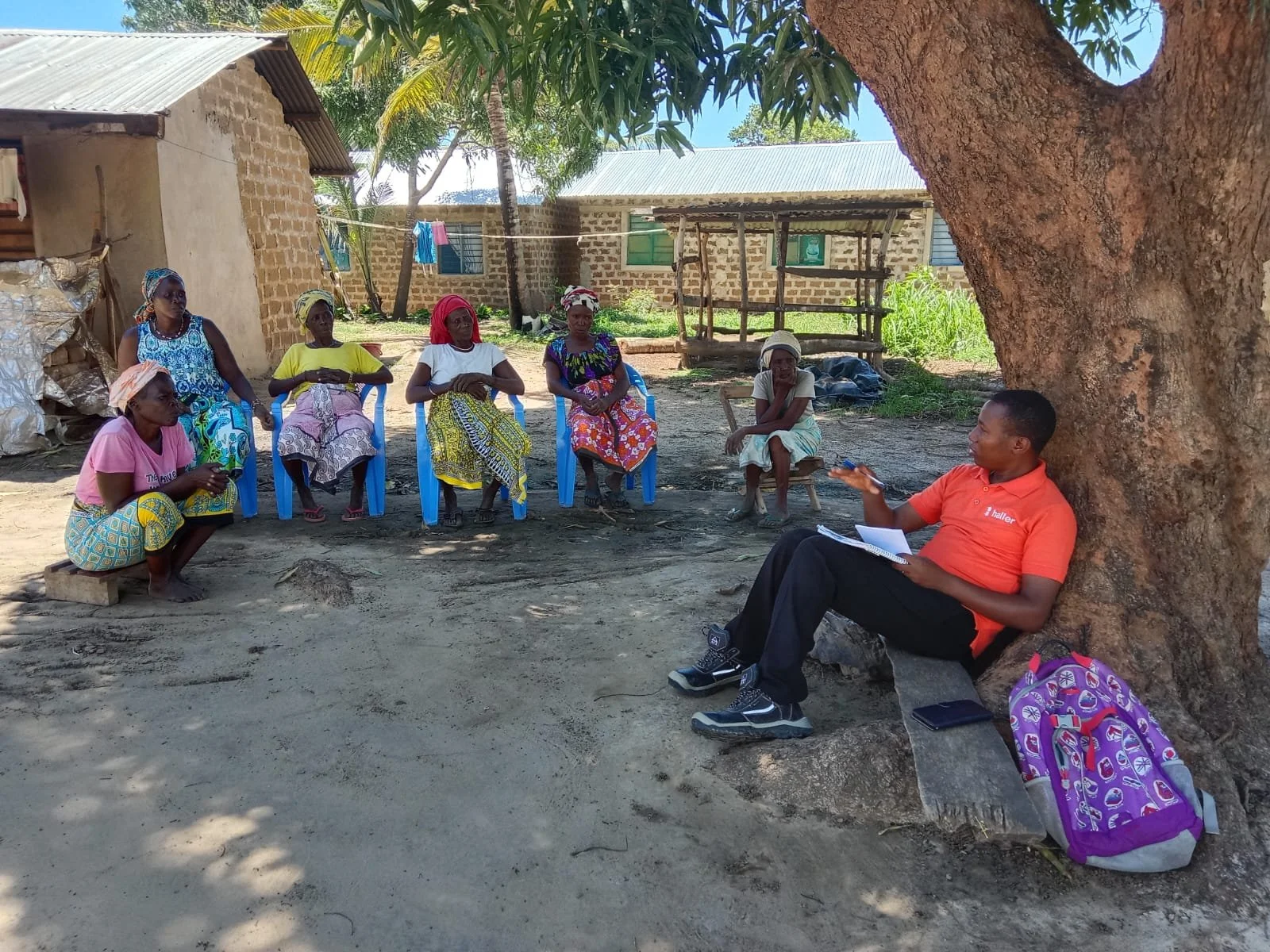
Focal Discussions in Kikambala
Water remains the greatest daily challenge
For many households, access to safe water is neither simple nor reliable. Families often travel between 2 and 5 kilometres to collect water, with women and children carrying much of this responsibility. During periods of drought, 83% of households experience acute water scarcity, forcing families to ration water for drinking, cooking and farming.
Existing water infrastructure is often unreliable. Community water points have suffered theft and vandalism, while piped water is not consistently tested for quality. Although the area receives seasonal rainfall, 90% of households are not currently harvesting rainwater, representing a huge opportunity to improve long-term water security.
Farming is central—but increasingly difficult
Agriculture remains the backbone of life in Kikambala. Most households rely on small-scale, seasonal farming to feed their families, yet changing weather patterns, poor soils and limited access to water are making this increasingly difficult.
The baseline found that 92% of households experience soil erosion, while farmers consistently identified drought, declining soil quality, pests and diseases as the biggest barriers to producing enough food. At the same time, many expressed a strong desire to learn new regenerative farming techniques and adopt more sustainable practices.
These findings reinforce why Haller's integrated approach—combining regenerative agriculture, water management and practical farmer training—is so important.
Strong communities with enormous potential
While the report highlights significant challenges, it also reveals something equally important: the strength of the community itself.
Women play a leading role in household livelihoods, agriculture and small businesses, making up nearly two-thirds of survey respondents. Community savings groups are active, environmental awareness is high, and many households are already taking steps to protect their land through tree planting and soil conservation.
Perhaps most encouragingly, residents showed a genuine willingness to embrace new ideas. Farmers expressed enthusiasm for agricultural training, renewable energy solutions and digital learning tools that could help them build more resilient livelihoods.
More than infrastructure
The baseline also reminded us that successful development is about more than installing infrastructure.
As Haller begins work in a new community, building trust is just as important as building water systems. During the survey, some residents were understandably cautious about sharing information due to local political sensitivities and historical concerns around land ownership. Working alongside local leaders and community organisations was essential in creating confidence and ensuring people felt heard throughout the process.
This collaborative approach will remain at the heart of the project as it grows.
Looking ahead
The Kikambala Resilience Initiative will bring together solar-powered energy, safe water, improved sanitation, regenerative agriculture and digital agricultural knowledge through an innovative community hub model. By tackling these interconnected challenges together, the project aims to strengthen food security, improve public health, restore the environment and create more resilient livelihoods for years to come.
This baseline marks the beginning of that journey.
Over the coming years, these findings will serve as the benchmark against which progress is measured. More importantly, they ensure that every intervention is grounded in the needs, aspirations and experiences of the people of Kikambala.