Growing Hope Through School Food Forests
How a partnership between Haller and Harvest Food Forest is creating lasting change in Kenya and Uganda
At The Haller Foundation, we believe that sustainable agriculture is about more than growing food. It is about creating opportunities, building resilience, and helping communities realise their potential.
That belief lies at the heart of a growing partnership with Harvest Food Forest (HFF), a community-led initiative working with schools in Kenya and Uganda to equip young people with practical life skills, environmental awareness, and pathways to sustainable livelihoods.
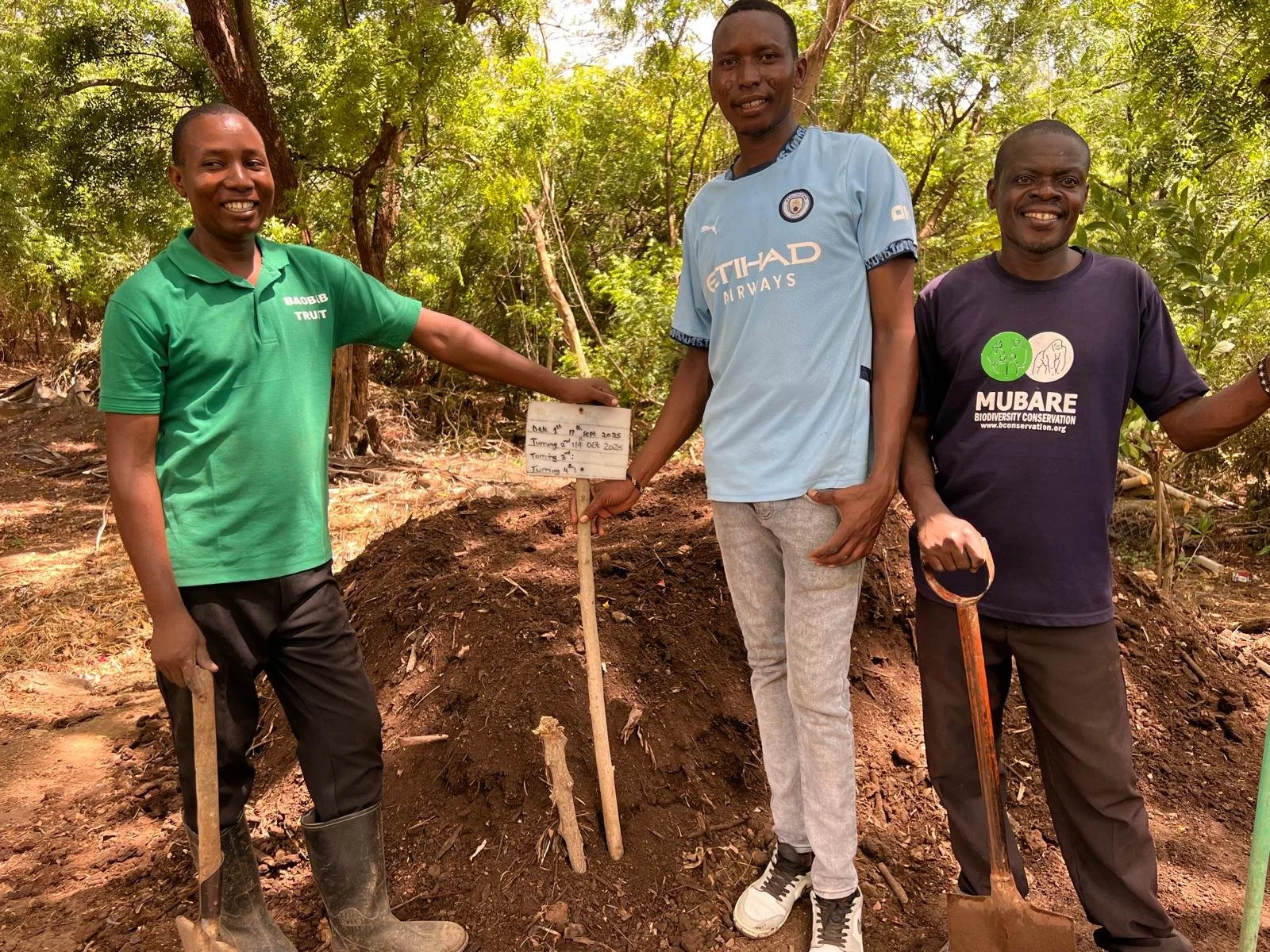
In early 2026, Haller welcomed three members of the Harvest Food Forest team to the Haller Demonstration Farm in Mombasa for an intensive 12-day organic farming programme. The training came at a crucial moment for two school food forest projects: Rubona Primary School in Uganda, now entering its fourth year, and Kalesuria Primary School in Kenya, which recently completed its first pilot year.
Both schools are supported by local gardeners who play a vital role in establishing and maintaining the food forests. While passionate and committed, they had limited formal training in organic farming and were eager to strengthen their skills. The programme focused on practical topics including composting, soil health, pest management, farm planning, record keeping, and ecological farming systems.
For Harvest Food Forest founder Sharlene Cohen, the training represented far more than technical knowledge.
“Seeing is believing. This training helped our team move beyond perceived limitations and understand what is truly possible through organic farming.”
One of the most significant outcomes was a shift in mindset. Rather than reacting to problems as they arose, participants learned to observe, plan, and manage their gardens as living systems. New farm management plans are already being implemented, alongside improved garden design and stronger daily practices.
The impact extends well beyond the school gates.
Using a train-the-trainer approach, the gardeners will now share their knowledge with teachers, students, families, and neighbouring farmers. Over time, the school food forests will become local demonstration sites where entire communities can learn about sustainable food production and environmental stewardship.
Together, Haller and Harvest Food Forest are demonstrating how investment in people can create a ripple effect of positive change — helping young people, schools, and communities build healthier and more sustainable futures.