
In Kitui County, unpredictable rainfall, rising costs and declining soil health make it increasingly difficult for smallholder farmers to grow enough food for their families.
To better understand these challenges, our delivery partner, Itanya Africa Group, recently conducted a baseline study with 32 farming households participating in a new Vertical Gardens Project, funded by The Regen Trust.
The findings provide an important starting point for the project, helping us understand farmers’ current circumstances, practices and priorities. They will also enable us to measure changes in food security, nutrition and soil health as the project progresses.
Farming under increasing pressure
The baseline paints a clear picture of households whose livelihoods are closely tied to the land, but who face considerable barriers to producing enough food.
More than half of the farmers surveyed cultivate one acre or less, while 41% have no source of income beyond farming. This leaves families particularly vulnerable when harvests fail.
Last season, 84% of households said their harvest did not meet their food needs, while 78% had experienced crop loss. A lack of water and farming inputs were the most commonly cited causes, followed by poor soil health, pests and disease.
Although most households eat three meals a day, 28% manage on only one or two. When harvests fall short, families are often forced to rely on other income to purchase food.
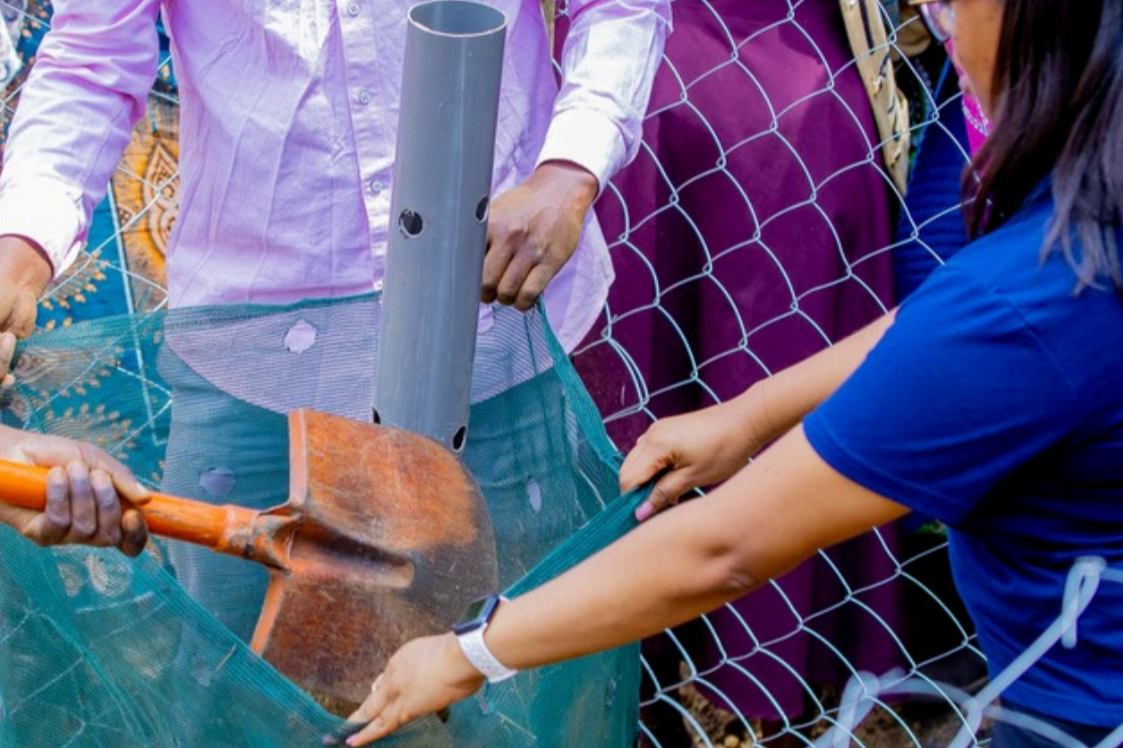
Image by Andrew Ogango
The cost of a nutritious diet
Leafy vegetables are already an important part of local diets. Ninety-one per cent of households eat them at least two to three times a week, demonstrating both demand and an understanding of their value.
However, only 41% currently grow their own. Most households depend on local markets, and 71% said cost was the main factor preventing them from eating vegetables more regularly.
Growing leafy vegetables close to the home could help families reduce their reliance on purchased produce while improving access to fresh and nutritious food.
This is where vertical gardens can make a meaningful difference. Requiring relatively little land and water, they offer a practical solution for households working with small plots and limited resources.
Encouragingly, while 78% of those surveyed had never previously heard of vertical gardens, 97% were interested in using them to grow vegetables at home.
Rebuilding knowledge and soil health
The study also highlighted a significant gap in access to agricultural training. Nearly three-quarters of respondents had never received training in Good Agricultural Practices, while 66% had not heard of regenerative agriculture.
Yet many farmers are already using techniques that form part of a regenerative approach. Sixty-six per cent apply compost or manure, almost half plant trees on their farms, and others practise crop rotation and mulching.
The project will build on this existing knowledge through practical, hands-on training that is accessible to farmers of different ages and education levels.
This training is particularly important given the condition of the soil. No earthworms were observed across any of the 32 plots assessed, and two-thirds were either bare or only partially covered by vegetation or mulch. Both findings indicate that soil biology has been weakened and that the land is vulnerable to moisture loss and erosion.
By encouraging practices such as composting, mulching, cover cropping and reduced tillage, the project will help farmers gradually rebuild healthier, more productive soils.
Listening to farmers
When asked what they would need to make a vertical garden successful, farmers identified three clear priorities: practical training and follow-up support, access to inputs such as seeds and fertiliser, and a reliable water supply.
Water remains one of the greatest challenges. Rainfall is the leading water source for the households surveyed, yet increasingly unreliable rainy seasons continue to affect crop production. Seventy-eight per cent of farmers felt that having a water pan at home would help them grow vegetables and improve productivity.
These insights will directly shape how the project is delivered. Alongside vertical garden installation and training, the project will explore practical ways to improve water harvesting, strengthen soil health and ensure farmers have the materials and ongoing support they need.
A strong foundation for change
Despite the challenges they face, the farmers involved in the study expressed considerable confidence and enthusiasm. Ninety-seven per cent felt confident or very confident that they could improve their farming outcomes by adopting new practices.
That willingness to learn is a powerful foundation for the months ahead.
The baseline has helped us understand not only where the project is starting, but also where it has the greatest potential to make a difference: reducing the cost of nutritious food, improving household resilience and equipping farmers with practical skills that can support them long into the future.
Together with Itanya Africa Group and Regen Trust, we look forward to following the farmers’ progress and sharing what we learn as their vertical gardens begin to grow.